
Finding the Signal: Lessons from a Record-Breaking Season
Updated: Mar 1
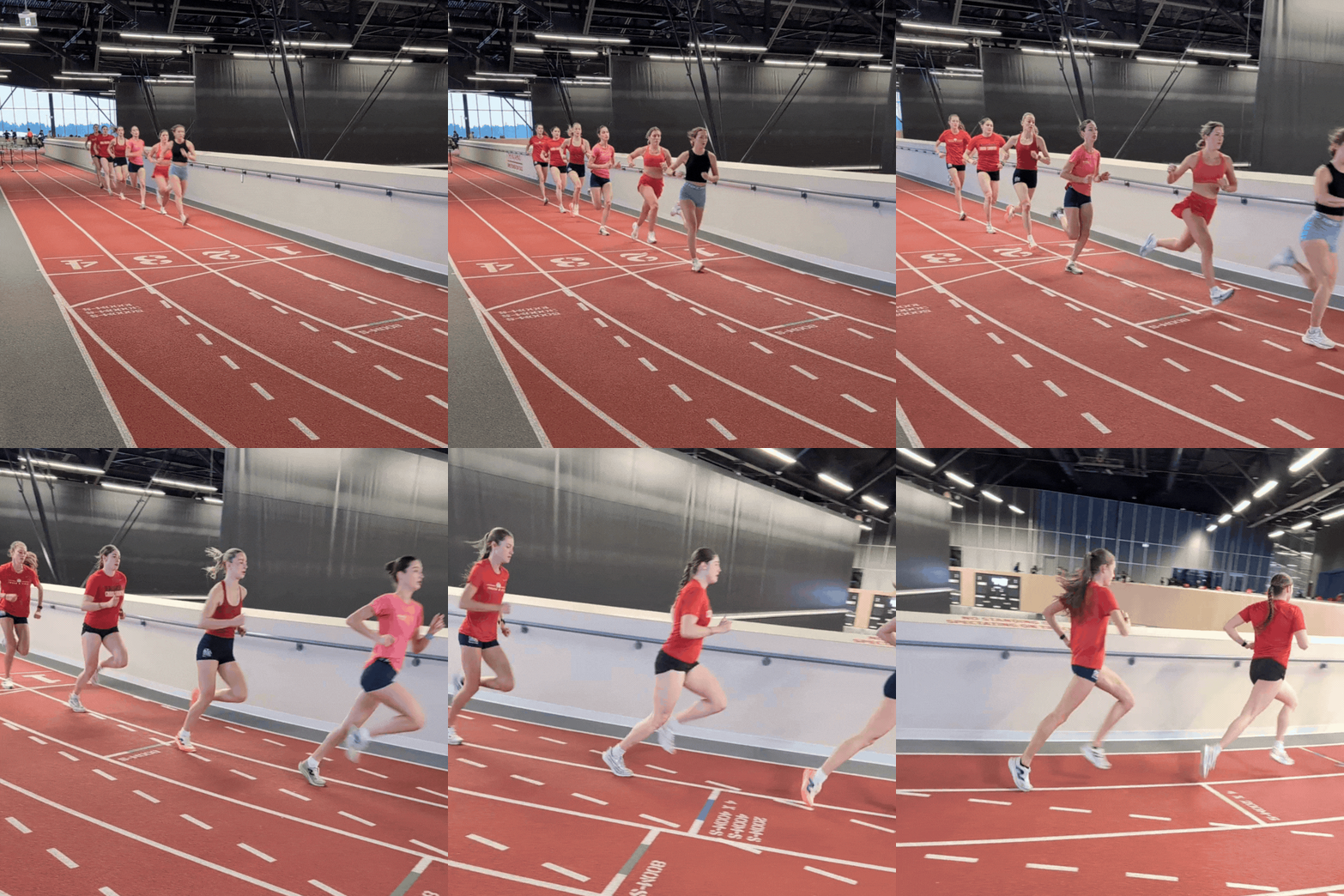
We just wrapped up the OUA Championships, a natural point of reflection as we plan for the future. The season as a whole was massive: we rewrote the Brock record books in the 600m, 1000m, 1500m, 3000m, and the 4x800m relay. Seeing 11 personal bests at the final meet was the perfect capstone to a year where our distance squad effectively moved the bar for what’s possible at this school.
Looking through my notes this week, I realized that while training plans are complex, the principles behind these results are usually simple. We often overcomplicate things, adding noise where we need focus.
Here are three thoughts covering the mental, the emotional, and the physical. They all point to the same goal: Better Performance.
1. Position to Perform (The Mental)
When my son was just learning to speak, he was obsessed with Lego. When you look at a pile of bricks on the floor, each individual piece seems pretty inconsequential. But he never worried about the massive pile; he just focused on finding the next right piece.
Eventually, those tiny, boring pieces came together to form sections, and suddenly, he’d hold it up and proudly announce: "Green Ahmy Hudder!" (Green Army Hummer, I later found out).
This is exactly what Steve Magness and Brad Stulberg talk about when they study high performers. The best athletes aren't superhuman every single day. They are simply really good at doing the basics. They aren't consistently great; they are great at being consistent. 🤯
At Brock, I often tell athletes to put themselves in a position to perform. You have to assemble the pieces before you can worry about the final product. Here are two ways to shift your focus from the outcome to the process:
Focus on Competing: In a tight 1000m heat, forget the clock. Focus on tactics, race flow, and "winning" your position. When you make active decisions and remember that "action cures all," the time you’re looking for will naturally follow.
Targeted Milestones: If you struggle to stay present, simplify the goal. To break 4:00 in the 1500m, your only task is to hit the 1000m mark under 2:40 and then compete. This creates a narrow focus while leaving the finish open-ended.
2. Stop "Shoulding" on Yourself (The Emotional)
We often fall into the trap of setting goals based on what we think we should do, rather than who we actually are. Steven Hayes’ Acceptance and Commitment Therapy (ACT) suggests that for a goal to stick, it must align with your core values.
The "Should" (Extrinsic): Setting a goal to "lose 10 lbs" or "get shredded" just to fit a social media standard. Because this is driven by external approval, it often leads to stress and a feeling that you’re "never enough."
The "Value" (Intrinsic): Setting a goal to build enough stamina to hike with friends or the energy to keep up with your kids. This is driven by your personal values of connection and health.
The connection is backed by decades of research on Self-Determination Theory. When you are driven by intrinsic motives like mastery and personal meaning, you experience higher well-being and more sustainable performance.
In contrast, when goals are dominated by external rewards like status, image, or money, you become more vulnerable to emotional exhaustion. Even if you look successful on the outside, you’ll likely feel burned out on the inside.
Make sure the goal actually belongs to you.
3. Cut the "Busy Work" (The Physical)
Running is full of "busy work," meaning exercises that feel productive but don’t actually translate to speed. Take the classic "butt kick" drill. You see it everywhere, but legendary coach Vern Gambetta argues it’s a total misunderstanding of mechanics.
"It appears to mimic what happens in the stride cycle, but in reality... the butt kick is telling the hamstring to flex the knee, in essence creating neural confusion. It is not an exercise worth spending much time on." - Vern Gambetta
In a real stride, your leg flexes because of ground reaction forces and momentum, not because you’re actively trying to kick your own glutes. Instead of isolated muscle movements, focus on extrinsic cues (through guided discovery) which is simply how your body moves through space.
I’ve put together a YouTube playlist of drills (below) that can help if you want to see this in practice:
The Value of a Coach
There is an old saying: "Athletes do, coaches think."
It is hard to see the picture when you are inside the frame. That’s why even the best athletes in the world have coaches. A coach isn't just a cheerleader; they are a filter. They can help you ignore the "butt kicks" of life and focus on the "lego pieces" that actually move the needle.
Whether you are trying to clean up your running mechanics or figure out why you are training in the first place, you don't have to figure it out alone.



soicauxsmb.com hôm trước mình lướt thấy ai đó nhắc nên tiện tay mở thử cho biết, kiểu xem giao diện ra sao thôi. Vào cái là thấy trang làm khá “dễ thở”, khoảng trắng vừa đủ nên nhìn không bị bí. Mình để ý cách họ chia nội dung theo từng khối rõ ràng, kéo xuống tới đâu biết mình đang ở phần nào tới đó, không cần căng mắt tìm. Menu cũng nằm chỗ dễ thấy nên chuyển qua lại nhanh, bấm cái là tới, không phải vòng vèo. Nói chung cảm giác dùng nhẹ nhàng, nhất là mấy khối thông tin xếp gọn theo cột nên nhìn rất sạch trên trang.
sunwin mình vừa ghé qua thử cho biết vì thấy bạn bè nhắc hoài, chứ cũng không có ý định mò sâu gì. Ấn tượng đầu tiên là trang nhìn khá thoáng, nội dung được chia thành từng khối rõ ràng nên mới vào không bị ngợp. Mình lướt trên điện thoại thấy cuộn trang với chuyển mục khá mượt, kiểu bấm cái là nó phản hồi liền chứ không lag hay rối mắt. Mấy phần chữ cũng không bị dồn dập, nên đọc lướt nhanh vẫn nắm được ý chính. Nói chung giao diện làm theo kiểu hiện đại, nhìn là biết nên bắt đầu từ đâu. Mình thích nhất là các tiêu đề và ô nội dung được…
https://soicau247.com/xs-minh-ngoc-hom-nay.html bữa mình lướt thấy ai đó share nên bấm vào coi thử cho biết thôi. Mình không rành mấy vụ này nên chủ yếu xem trang họ trình bày có dễ theo dõi không. Thấy họ để tiêu đề kiểu “xổ số Minh ngọc 247” với phần soi cầu/dự đoán nhìn khá nổi, kéo xuống là gặp các khối nội dung tách riêng nên đỡ bị ngợp. Có đoạn thống kê kết quả kỳ quay trước nhìn dạng bảng nên mình liếc cái là hiểu ngay hôm qua ra gì, không phải đọc lan man. Nói chung cảm giác trang làm gọn gàng, chữ nghĩa rõ, không phải mò mẫm nhiều, nhất là mấy khung thông tin chia theo…
kèo nhà cái 55 bữa mình thấy bạn bè nhắc nên ghé thử cho biết chứ cũng không phải dân soi kèo gì đâu. Vào cái là mình để ý ngay cái bảng kèo bóng đá trực tuyến nhìn khá gọn, kiểu chia cột rõ ràng nên lướt một phát là thấy giờ trận với phần cả trận hiệp 1 nằm tách riêng. Mình thích nhất là dữ liệu được cập nhật liên tục theo mấy trận trong ngày, cảm giác đỡ phải refresh nhiều trang hay đi tìm chỗ khác. Mà giao diện cũng thoáng, chữ số không bị dính vào nhau nên nhìn tỷ lệ không bị rối mắt. Nói chung ngồi xem vài phút là quen tay…